Due dates driven by the odometer
A plan — oil change every 30,000 km or every six months — applies to the vehicles concerned. The driver's odometer reading at shift start moves the schedule forward.
30-1028-123 · TRACTOR
TruckFlow brings together orders, smart dispatching, trailer coupling prep, live tracking, an offline driver app, fleet, workshop and billing. Every truck leaves with the right trailer, the right driver, at the right time.
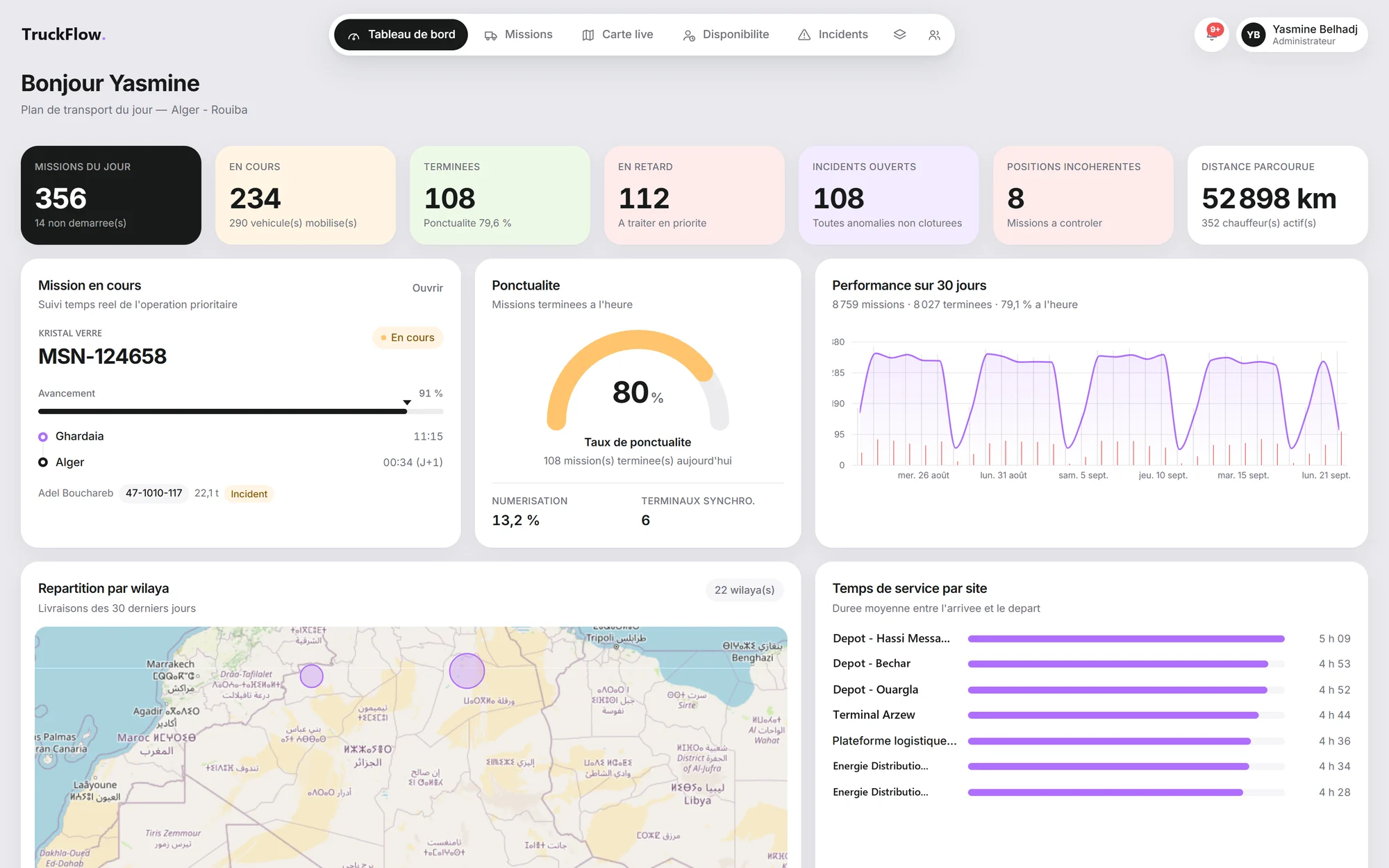
Every body type · every road transport trade
field events tracked per mission, from departure to mission end
job profiles, from driver to supervision
fine-grained permissions, module by module
of driver reports possible without network
languages in the driver app: French and العربية
Eight steps, one data set. What sales enters, planners schedule, the yard couples, the driver reports and billing invoices — with no re-keying.
—
—
The engine weighs every confirmed order, tractor, trailer and available driver together. It builds compatible combinations and minimises empty approach across the whole session — not order by order.
Handling orders in arrival order leaves the last ones served by distant trucks. Batch optimisation spreads approach distances across the whole set.
Randomly generated scenario: 8 trucks, 8 orders. Real-world savings depend on your network.
TruckFlow turns the transport plan into yard tasks, depot by depot: no trailer, to couple, to uncouple, ready. Each departure reads as a picture — the tractor, its trailer, the body type drawn — and a confirmed coupling switches straight to “Ready”.
Eleven events mark every mission, reported from the phone as they happen. Each report is geolocated, time-stamped and compared with the expected site.
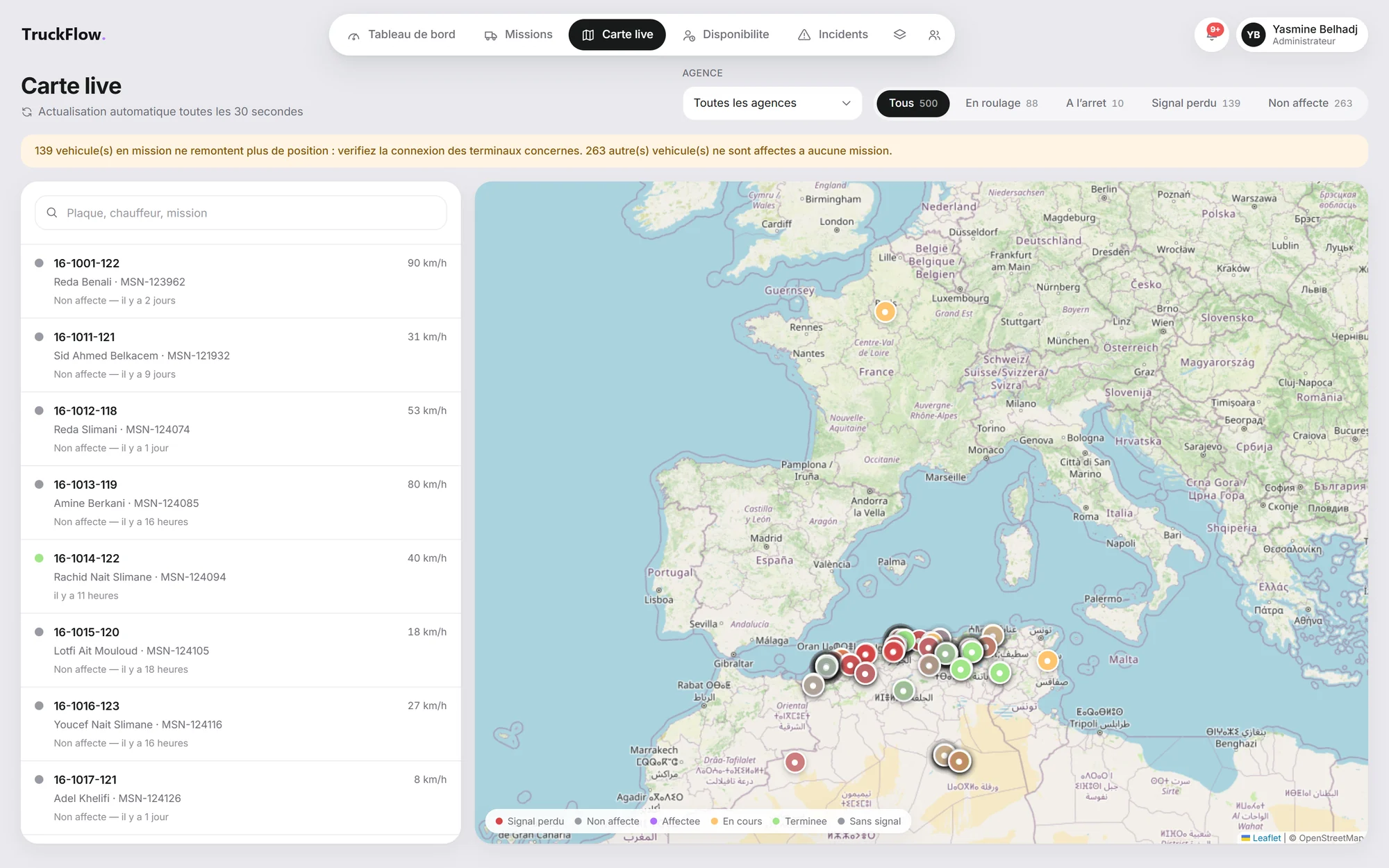
Reports made outside the expected site's zone are flagged on the map and in the timeline — usually a wrong site, rarely a lost truck.
Each event shows its gap to the planned time: +7 min, +1 h 15. Delays show up before the customer calls.
Give your customer a link to follow their shipment — no account, no call to operations.
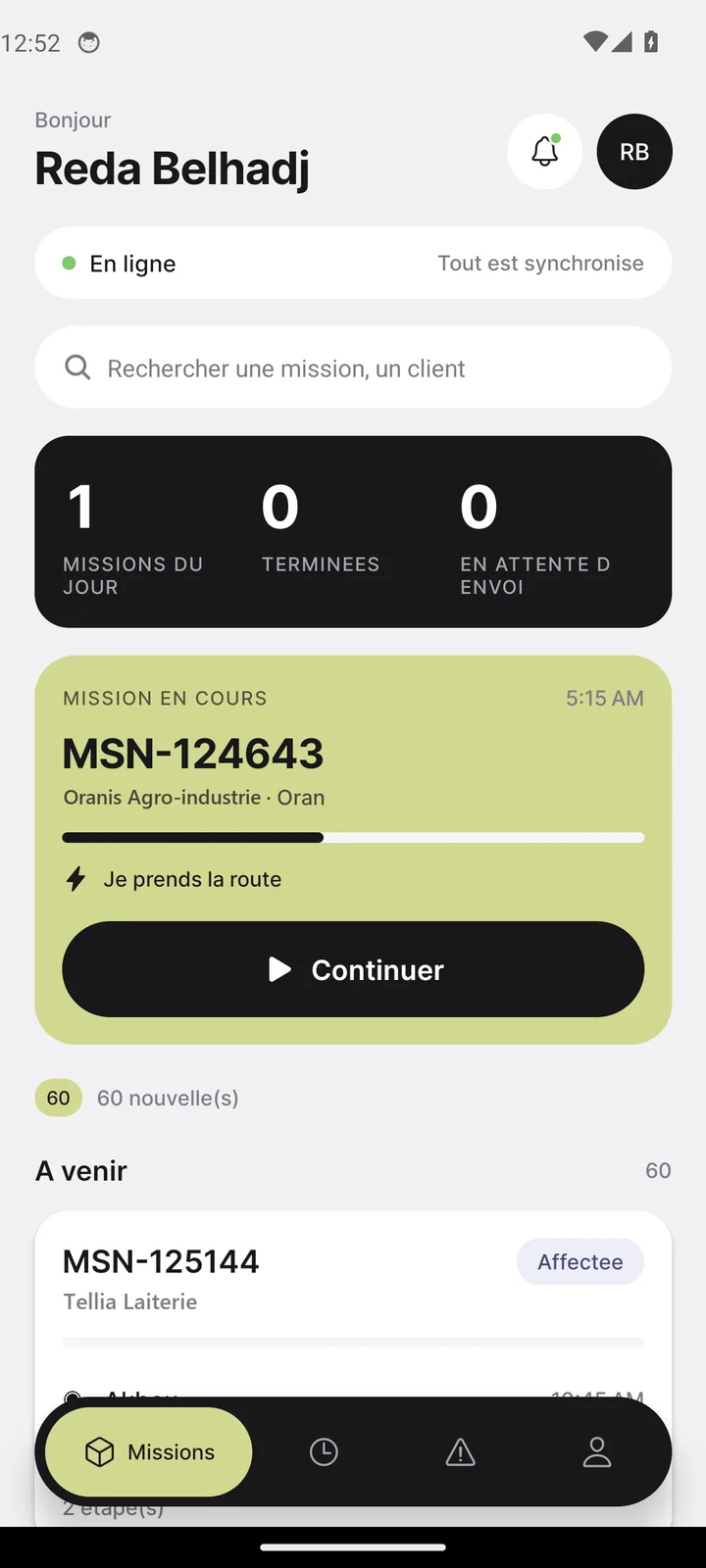
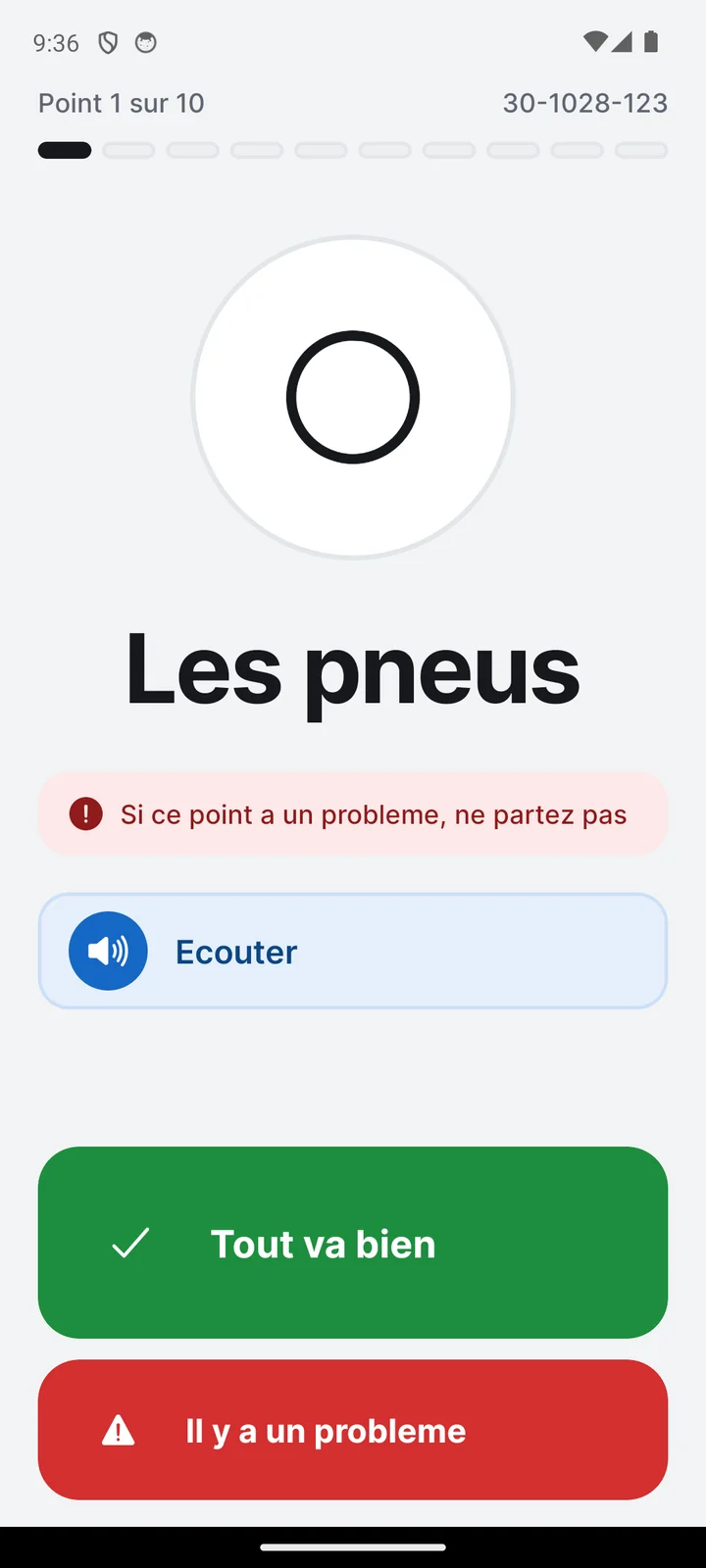
Big type, one big button, the next step. The app offers the expected event exactly when it's expected — and keeps working without network.
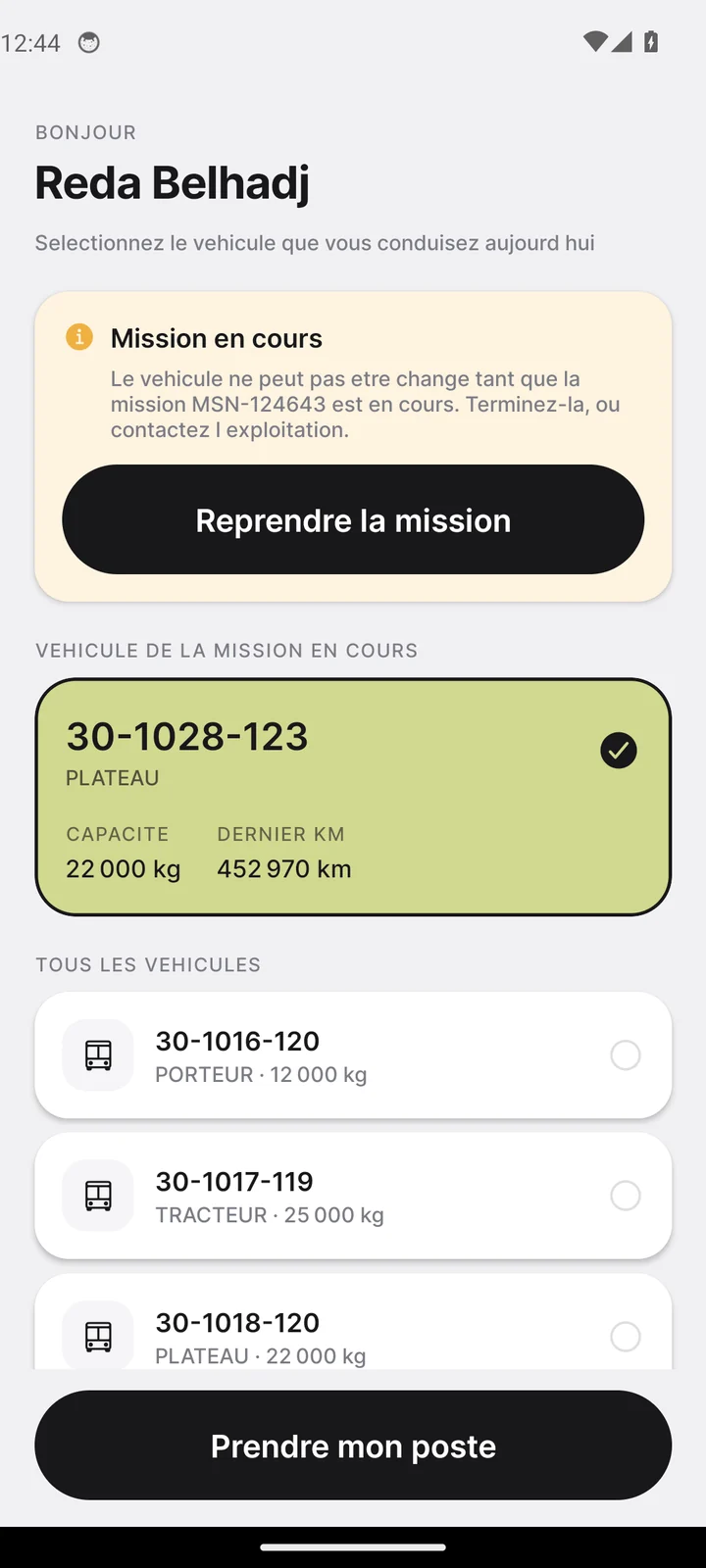
Maintenance, repairs, parts store, compliance, fuel and tyres feed operations directly: a truck in the workshop is no longer offered to dispatching.
A plan — oil change every 30,000 km or every six months — applies to the vehicles concerned. The driver's odometer reading at shift start moves the schedule forward.
Insurance, roadworthiness test, permits; licences, medicals, qualifications, ADR. An expired qualification excludes the driver from the jobs that require it — with the reason.
Consumption is calculated between two fill-ups; any deviation beyond the threshold is flagged.
Below the legal limit, the tyre is flagged on the vehicle plan.
Fuel, maintenance, tyres, parts: the outlier vehicle jumps out.
Contracts and rate cards, road-based quoting, transport purchasing from partner carriers, pre-invoices approved by the customer: margin reads order by order.
Distance is calculated by road, the contract rate card applies, surcharges are added on top. A changed rate card never recalculates an order already quoted.
Carrier tenders, offer comparison, award. Cost becomes an agreed price — and the incoming invoice is matched against it before payment.
A period's delivered orders are submitted to the customer before invoicing. Prepare, approve, issue: three permissions, three pairs of hands.
A rule — three tankers a day, Sunday to Thursday — generates its orders over the chosen period. The preview shows the dates before anything is created.
Selling price and margin are two separate permissions. The columns only appear for authorised profiles.
The profile defines what an account can do; the scope defines which branches it can do it for. The interface only shows what the profile allows — forbidden buttons are absent, not greyed out.
—
A branch account sees its own branch and those entrusted to it. A record outside scope is reported as not found.
Changing a profile or scope instantly closes open sessions: a revoked right is revoked right away.
Preparing, approving and issuing an invoice are three separate actions. Supervision sees everything and enters nothing.
An event is corrected with a reason, never erased. Logs show who did what, and when.
Third-party systems feed TruckFlow or query it: shipper orders, fuel card fill-ups, telematics positions, accounting entries.
Branches, vehicles with their body type and capacity, drivers with their usual truck, geocoded customers and sites.
One profile per role out of thirteen, one scope per branch. Temporary password changed at first login.
Rate cards and surcharges, company billing identity, default document template.
Confirm the order book, run the session, apply: missions go out to the drivers' phones.
30 minutes on your own flows: a batch of orders, your fleet, your depots. You leave with a costed dispatching session.